
Songkran in Thailand
Songkran is often introduced to travelers as Thailand's water festival, but that description only captures the surface. Held each year from April 13-15, it is a New Year period shaped by renewal, respect, family rituals, temple visits, and, in many places, an unmistakable sense of joy in the streets.
For first-time visitors, Songkran can feel more layered than expected.
Yes, there are lively public water celebrations. But underneath them sits a quieter structure: cleansing, merit-making, time with family, and gestures of respect toward elders.
The most rewarding way to experience Songkran is not to flatten it into a single image, but to understand how these different registers sit together.
More Than Water
The public image of Songkran is easy to recognize. Streets fill with people carrying water guns, music gets louder, and entire neighborhoods slip into a more playful rhythm.
Yet the festival's deeper meaning comes from renewal. Water is not only used for fun.
It is also connected to cleansing, blessing, and the idea of beginning the year in a lighter, better-ordered state. That symbolic layer is what stops Songkran from feeling superficial, even in places where the public energy becomes exuberant.
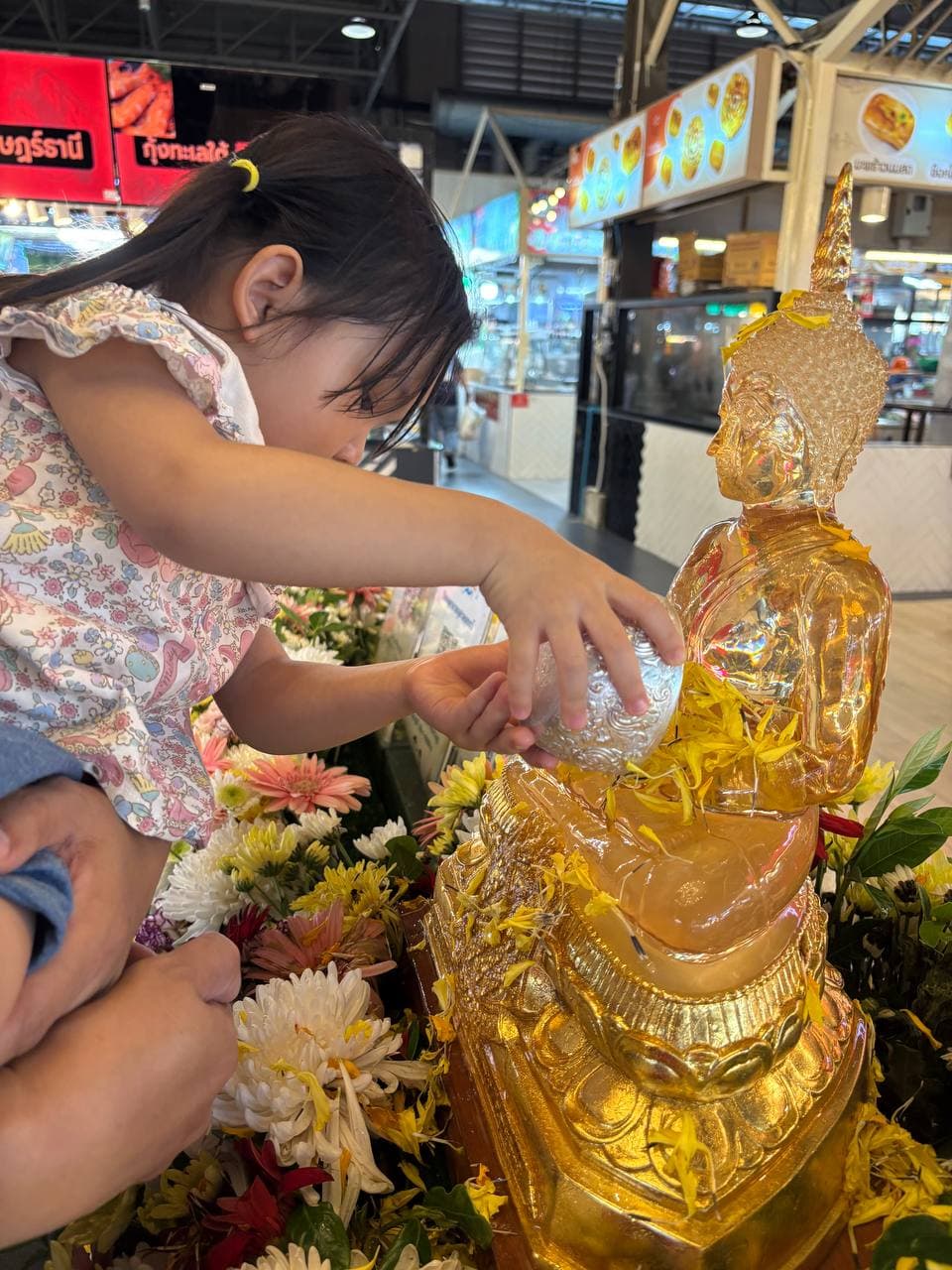
This is why Songkran can hold two moods at once. In one setting, it feels reflective and ceremonial.
In another, it feels exuberant and social. Neither cancels out the other.
Both belong to the festival.
What People Miss
Many visitors arrive expecting only the street atmosphere. What they do not always anticipate is how closely Songkran is tied to family life and temple practice.
In many households, the period is a time to return home, spend time across generations, and mark the New Year through gestures of gratitude and continuity. Temples become especially important, and the tone in the morning can feel entirely different from what appears later in the busiest public areas.
Once you understand that contrast, Songkran becomes easier to read. It also becomes more moving.
What first looked like a high-energy public festival starts to reveal its deeper emotional frame.
How To Experience It Well
For most travelers, the best approach is balance.
It helps to leave room for both sides of the festival: a temple visit or slower cultural moment, followed by time in an area where public celebration is part of the atmosphere. If you try to experience only the loudest version, the day can become one-note very quickly.
Timing matters too. Mornings may feel calmer and more observant.
Later in the day, many areas become far more energetic. Where you stay, how far you need to travel, and whether you have private transport arranged can all shape whether the day feels immersive or simply chaotic.
Etiquette Matters
Songkran is festive, but it is not without boundaries.
Travelers tend to do better when they approach the period with some cultural awareness. Light, good-humored participation is one thing.
Ignoring the setting, local dress expectations, or the presence of temples and families is another.
As a practical rule, it helps to dress with enough modesty for Thailand, protect valuables, expect to get wet in many public areas, and keep your tone respectful in spaces that are clearly more ceremonial than playful.
The festival is warm and open, but not careless. Visitors who read the mood well usually come away with the stronger memory.
Different Places
Songkran does not feel identical everywhere.
In Bangkok, the atmosphere can range from neighborhood-level ritual to large-scale, high-energy water celebration. In Chiang Mai, the festival often feels especially immersive, with the city taking on a stronger seasonal identity during the period.
Elsewhere, the mood may be more local, more family-oriented, or simply less theatrical.
That difference matters when planning. Some travelers want to be in the center of the action.
Others want access to the festival while still preserving comfort, privacy, and a sense of control over the day. Songkran is more enjoyable when the setting fits the kind of experience you actually want, rather than the loudest version available.
Why Planning Matters
Songkran is one of those moments when logistics affect the emotional quality of a trip.
The right hotel location, sensible daily routing, and clear expectations about traffic, crowd levels, and transitions can make the difference between feeling carried by the festival and feeling pinned down by it. This is especially true for travelers who want to enjoy Songkran without losing the coherence of the wider Thailand journey around it.
The strongest itineraries usually do not try to resist the festival. They absorb its rhythm and design around it.
The Real Texture of Songkran
Songkran stays with people partly because it allows Thailand's warmth to appear in more than one form at once. There is ritual and release.
There is courtesy and play. There is movement in the streets and quiet inside temple grounds.
Approached with a bit of perspective, it becomes more than a spectacle. It becomes one of the clearest ways to see how celebration, symbolism, and everyday culture meet in Thailand.
That is what gives the festival its staying power long after the noise and heat of the day have passed.
Planning Around the Festival
Because Songkran runs each year from April 13-15, it is worth treating those dates as a planning condition rather than a small seasonal detail. Hotel positioning, daily routing, airport transfers, and the balance between quieter cultural moments and public celebration all become more important during the festival period.
For travelers who want to experience Songkran with a sense of ease rather than improvisation, the difference usually comes from preparation. The day works better when you already know where you want to be, what kind of atmosphere you want, and how much intensity you actually want in the schedule.
Siam Luxe is a travel agency and tour operator based in Thailand, designing tailor-made journeys across Thailand and Southeast Asia with a close understanding of how festival periods shape the travel experience.